.png)

Search
- Print
- DarkLight
- PDF
Search
- Print
- DarkLight
- PDF
Article summary
Did you find this summary helpful?
Thank you for your feedback!
The LightBox City Directory Report uses a powerful search engine designed to return the most relevant coverage with minimal manual input.
How the search area is determined
Adjoining Coverage
LightBox engineered the industry-first Area of Interest (AOI), aligned to the definition as outlined in ASTM E1527-21. AOI programmatically identifies adjoining properties based on your target property. The new search leverages LightBox’s integrated location intelligence, including parcel and address data, building footprints, ownership information, and high-precision street maps. 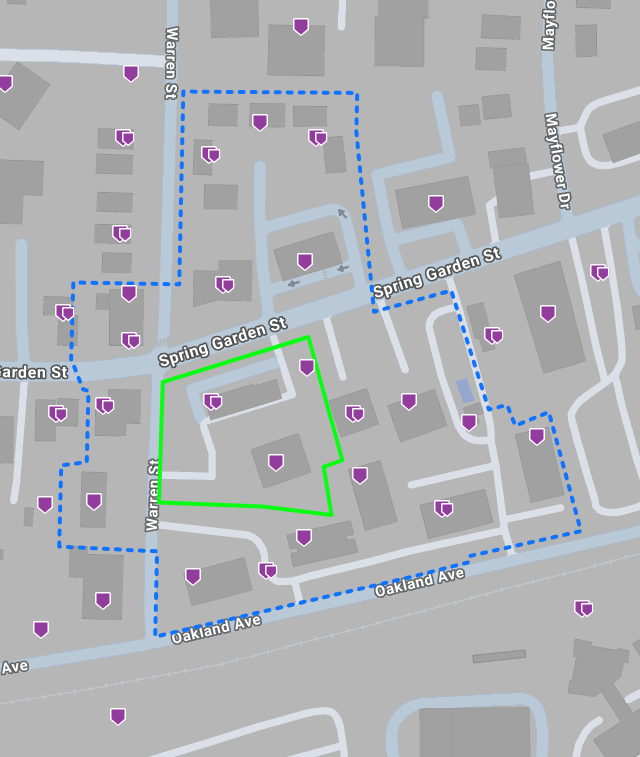
Surrounding Coverage
You may also see additional listings slightly beyond the adjoining boundary. This is intentional to account for:
Historical parcel or boundary changes
Dense urban environments where limited context could otherwise exclude relevant data
Once the Adjoining and Surrounding Boundaries are established, the search engine determines the streets and house-number ranges needed for your report. LightBox’s address universe is vast; the search engine evaluates all addresses potentially associated with a parcel.
Research review and consistency
Every City Directory undergoes researcher review. Researchers:
Follow standardized guidelines
Apply professional judgment in complex cases (e.g., unusual parcels, inconsistent addressing, or historical shifts).
Historical street names and address changes
The search includes programmatic linking intended to help with street name changes over time. However, not every historical condition can be detected automatically.
Researchers may reference LightBox’s Sanborn Map collection when needed, though this is not guaranteed for every order.
If you are aware of relevant historical street names or address details, you may contact LightBox to request their inclusion in the research.
Was this article helpful?
.png)